In the commercial motor vehicle (CMV) industry, technical competency is only half the equation. We can train a student to master double-clutching, memorize a flawless 90-step pre-trip inspection and back a 53-foot trailer into a tight dock with absolute precision.
However, if that same student enters the industry without an uncompromising, bone-deep culture of safety, all that technical skill means nothing.
According to federal data, large trucks are disproportionately involved in catastrophic accidents when driver focus wavers. As instructors at truck driving schools, private academies and high school career and technical education (CTE) pathways, our highest burden is to cultivate authentic behavioral change.
Classroom lectures and textbook warnings on the dangers of phone use or driving under the influence (DUI) often bounce off young adults and seasoned students alike. They view themselves as highly skilled or invincible.
To break through that wall of overconfidence, you need a high-impact, kinesthetic learning experience.
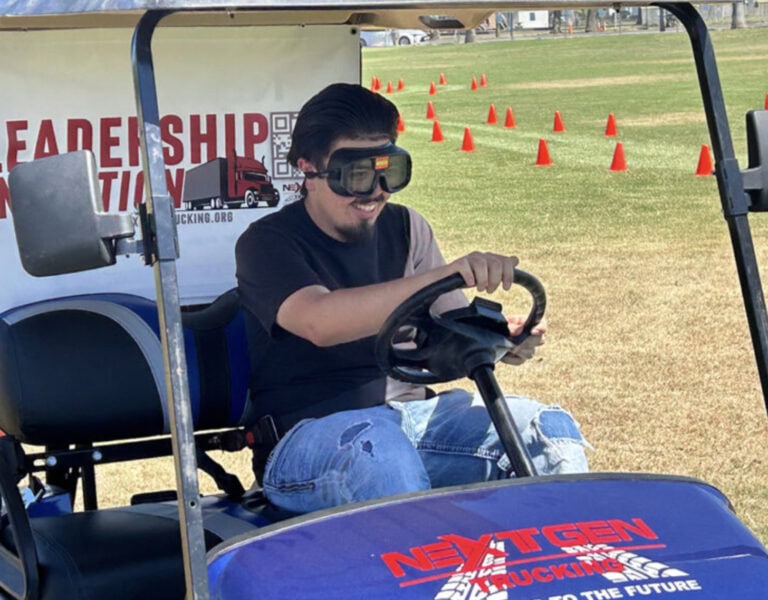
Building a physical distracted driving and impairment simulator using a modified golf cart is one of the most effective ways to dramatize these real-world dangers.