Subhead: Vocational Branding
by David Zelnio SHRM-CP
As pressure mounts on companies to recruit people for essential jobs like trucking, a few organizations have emerged to champion these professions. Health Occupations Students of America (HOSA) seeks to encourage health care careers. Teach for America promotes teaching, and NextGen in Trucking advocates for trucking as a career.
Next Gen, formed in 2021, is unique. They leverage research to develop messaging and networking to encourage companies who compete for drivers to cooperate and combine resources to increase the number of people choosing to drive as a career.
The trucking industry has a lot to offer, and the opportunity to connect depends on savvy messaging.
A recent ATRI report said the average truck driver is 47 years old. It’s a challenge because retirements are increasing, and younger workers are joining the workforce at lower rates. ATRI notes the number of 16-year-olds without a driver’s license has increased to 75 percent in 2023.
Enter vocational branding
Vocational branding, introduced in 2023 through the University of Nebraska-Kearney, aims to inspire individuals to pursue a particular career path (like trucking) by effectively communicating value, purpose, and rewards. While vocational advocates are plentiful (career fairs and classroom presentations), few use polished messages to define a target audience, brand personality, and narrative.
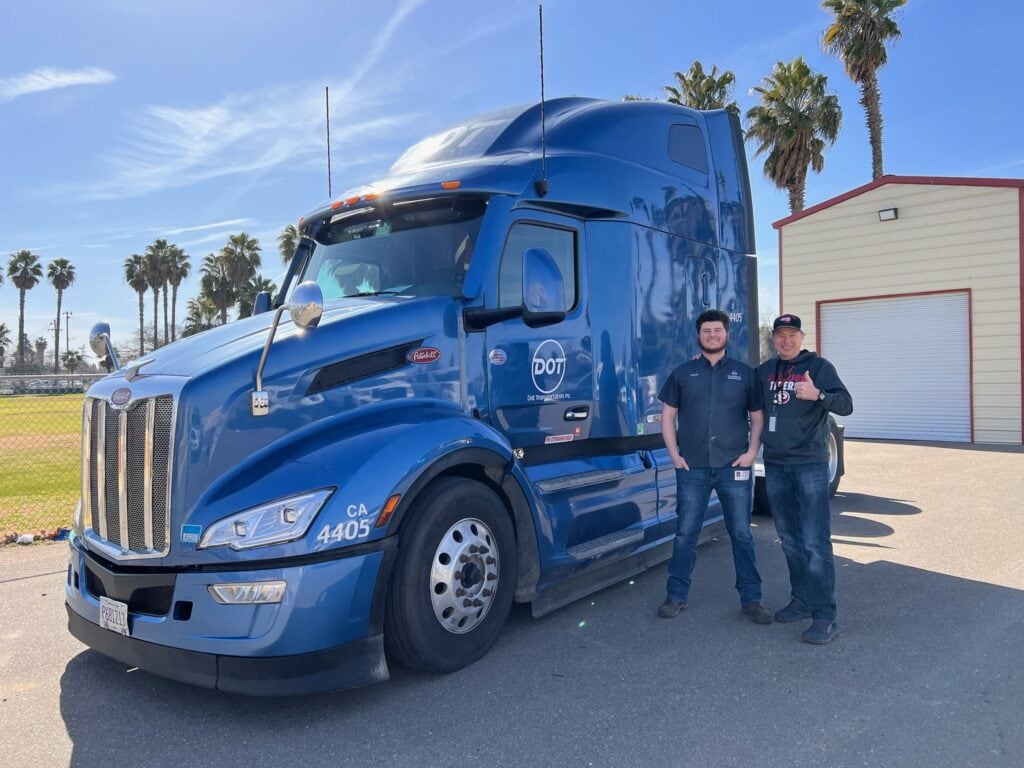
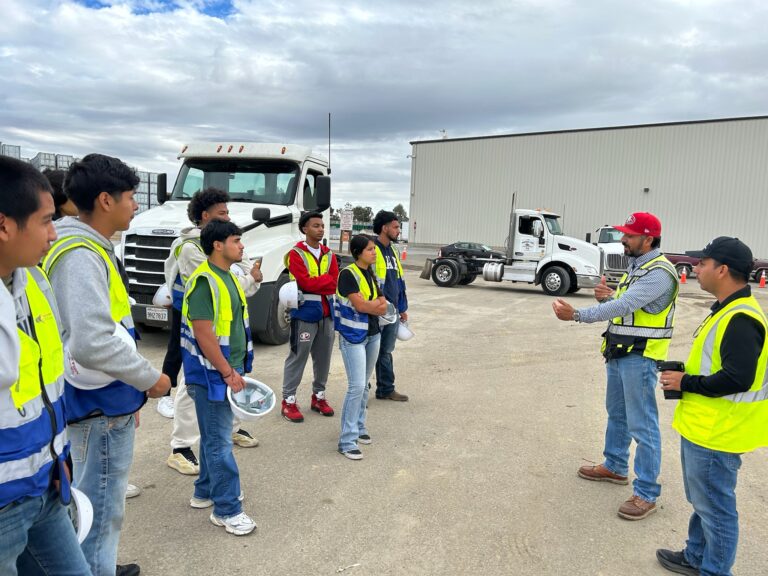
Next Gen in Trucking plays a pivotal role in promoting truck driving as a career. It stands as one of only a few organizations that provide companies, associations, schools, and students a place to combine effort, time, and resources toward promoting a vocation. From the beginning, Next Gen embraced established branding knowledge about truck driving as a profession to present effective messages.
Why would a trucking company care about milk marketing?
The “Got milk?” campaign provides good lessons for vocational branding of truck driving careers.
Nationally, milk was branded with celebrities donning milk mustaches. Taylor Swift, Elton John, and Brett Favre all appeared with white lips. The mustache campaign ran for a decade and achieved 90% recognition with U.S. citizens. That’s almost unheard of. More than 300 celebrities took part. Some did it for free. About $0.03 of every gallon of milk sold went to the Got Milk mustache campaign.
Sounds successful? Not. For the 10 years celebrities celebrated milk, sales dropped 22%. Why?
Compare that with California milk. Jon Steel, of Goodby, Silverstein & Partners, understood what many don’t: categories (truck driver as a career) require different strategies than individual brands (drive for Acme Truck Company).
Steel’s branding team followed families, sat with them at breakfast, and even put cameras in refrigerators to see how people interact with milk. They revealed the emotional connection people had with milk during key moments—eating cookies, cereal, or peanut butter sandwiches. The insight was brilliant: instead of promoting milk’s benefits, highlight what people missed when it wasn’t available.
California achieved a 7% increase in milk sales.
What’s the lesson for promoting trucking as a career? It takes effort to study the audience and to define what messages do and don’t work. For milk, Brad Pitt with a milk mustache didn’t work. But a desperate search for milk to go with that cookie did.
Learning from Generation Z
The American Transportation Research Institute has already published lessons on reaching Generation Z. A high school focus group, conducted by ATRI and the Nebraska Trucking Association, provides great messaging insights. Pay and benefits were good, but more important to the Gen Z group was serving the community like delivering critical supplies the day after a hurricane, or delivering hay after a flood. Modern sleeper cabs hit a positive note. Freedom to travel, the beauty of the drive, and even dogs scored high.
Next Gen in Trucking also sends messages with trucking advocates presenting to classrooms and even special high school programs where kids can get a taste of driving on simulators.
Associations branding vocations
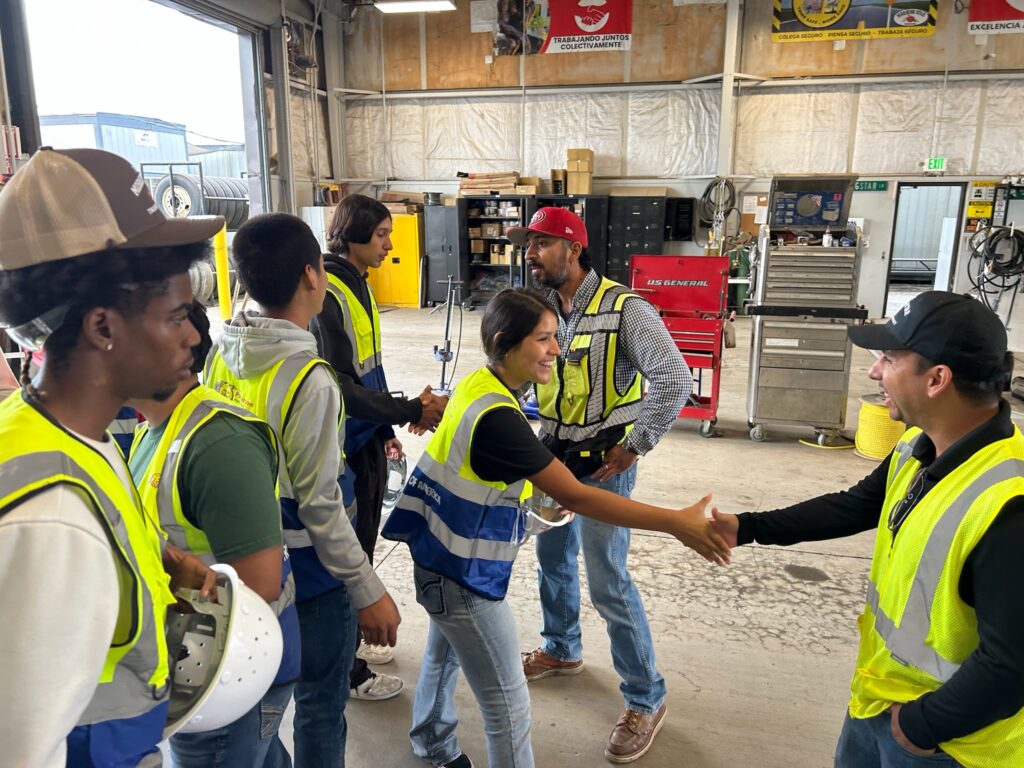
Branding a vocation is similar to branding and marketing a commodity, according to Kevin Lane Keller, E. B. Osborn Professor of Marketing at the Tuck School of Business at Dartmouth College, who also contributed to vocational branding research.
Keller said associations and trade organizations can easily adopt a commodity brand mentality. “Trade organizations can seek to transcend a lot of existing or potential competition to find the common cause that unites all,” he said.
“When you think about branding, it’s about changing the way people think, feel, and act,” Keller said. “That can be measured, especially when it gets to the acting part. How they act, and what they do, and what they buy.”
Advocacy is the tip of Keller’s Branding Pyramid. He said recommendations or encouragement from everyday people can often be more effective than celebrity endorsements.
“I’d say some of the best proponents for a career or a vocation are those who are actually in it,” Keller said. “They are sincere and come across as real. They’re going to have a certain amount of credibility and often have the passion about the vocation to talk about it in a very compelling way.”
Keller said brand builders must understand existing perceptions of the product (or vocation) and then the actual reality. What is the gap? How can you create new perceptions or change existing perceptions to put your best foot forward?
“You have to be careful in branding to meet or exceed market expectations. What am I going to get from this? Will it at least meet, if not surpass, those expectations?” Keller said. “You want expectations to be positive to encourage people. But if you go too far and over-promise, people will be disappointed. You can be worse off because you’ve anchored them higher than they should be.”
Branding can reverse a shrinking market
Beer might seem like an odd comparison to trucking careers, as was milk, but it offers valuable insights.
“The beer market has been shrinking for years now,” Keller said. “Maybe market leaders should think about promoting beer, even if a competitor might benefit. The logic is simple. If the beer category is getting bigger, we’re all going to get bigger slices of the pie. Instead, too often you get into comparative advertising battles or even wars where the category itself suffers.”
The same principle applies to trucking recruitment
Keller said these competitive battles can apply to vocations if not careful. Truck drivers, for instance, are highly recruited. Some companies may have a dominant presence in one region, but the notion of selling a vocation, even knowing that it might help other companies, could still be a good result because all companies in a community will get a share of a growing labor market.
Keller notes that vocational branding by an organization can offer an unbiased and credible effort on behalf of the vocation.
Key takeaways
Vocational branding offers a strategic approach that benefits the entire trucking industry, not just individual companies. Done right, it can produce effective messages that lead more people to pursue truck driving as a career.
Research shows shortcuts don’t work—the Got Milk campaign’s celebrity approach failed because it made assumptions rather than studying what actually motivates people. Good branding requires understanding the audience first.
Consider this: vocational branding is category branding. When the category grows, everyone benefits. Companies typically focus on employer branding—convincing drivers that their company pays more or treats drivers better than competitors. But devoting resources to vocational branding means convincing people to become truck drivers in the first place, whether they’re graduating high school or switching careers. That’s a bigger pie for everyone to share.
Vocational Branding research was authored by David Zelnio, SHRM-CP, and Dr. Tiffani Luethke, Associate Professor and Director of Communication Graduate Studies at the University of Nebraska-Kearney. It was officially introduced at the Midwest Academy of Management in Chicago in 2023. The study also appears in the Journal of Ethnographic & Qualitative Research, Researchgate, and Google Scholar. Zelnio is Customer Success Manager for Garner Industries in Lincoln, Neb. He spent more than a decade working with associations on human resources, communication, and public relations.
For more information, contact [email protected]